Structural causes
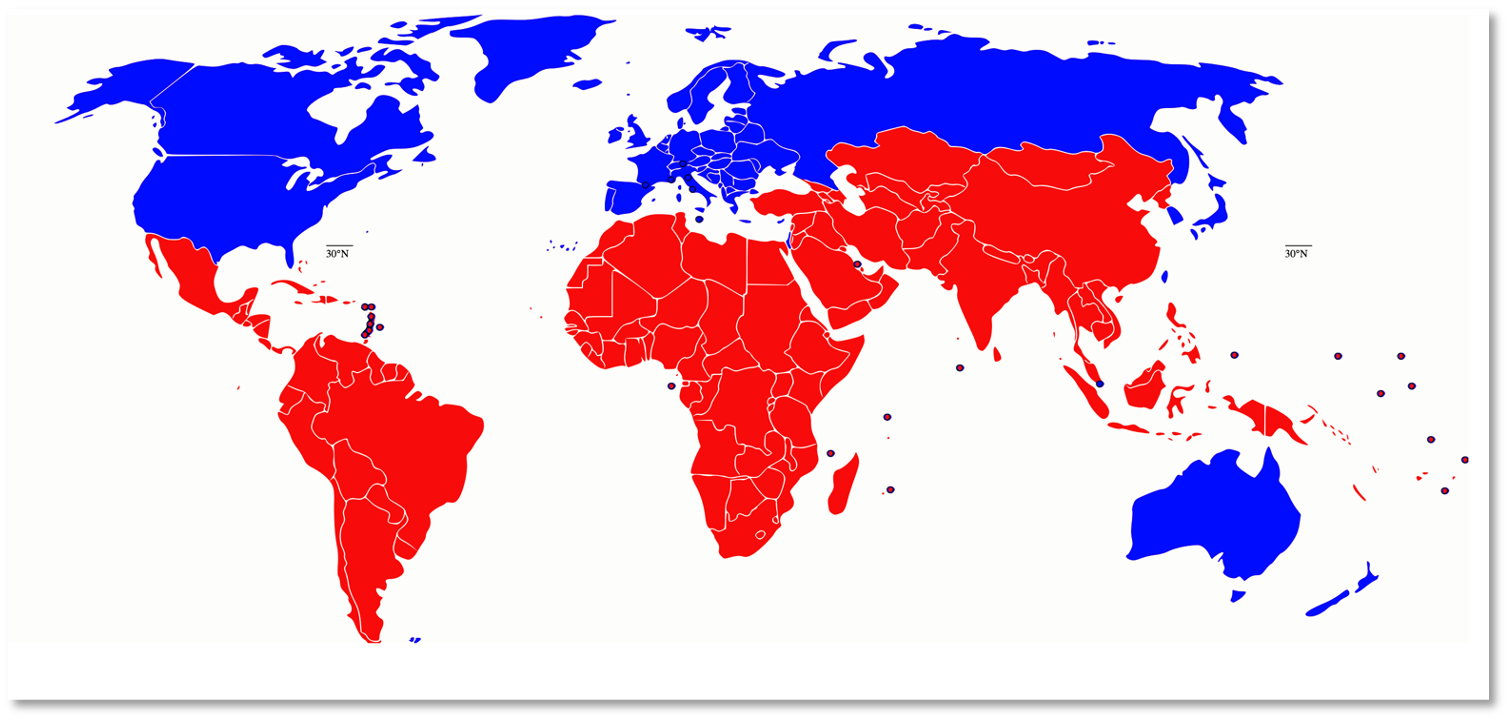
Countries of the Global South, with the exception of those that play a regional role due to their historical university infrastructure or their own development (such as Argentina, the Dominican Republic, South Africa, Cameroon, Egypt), have been exerting continuous academic pressure on countries of the North for several decades, and this single indicator alone (the difference between incoming and outgoing mobility) would make it possible to characterize the North‑South divide (see illustrations in the Appendix): the two maps overlap exactly.
Map 1 : Global student pressure (2024, Campus France, Key mobility figures) / Map 2 : North‑South divide (source en.academic.com)
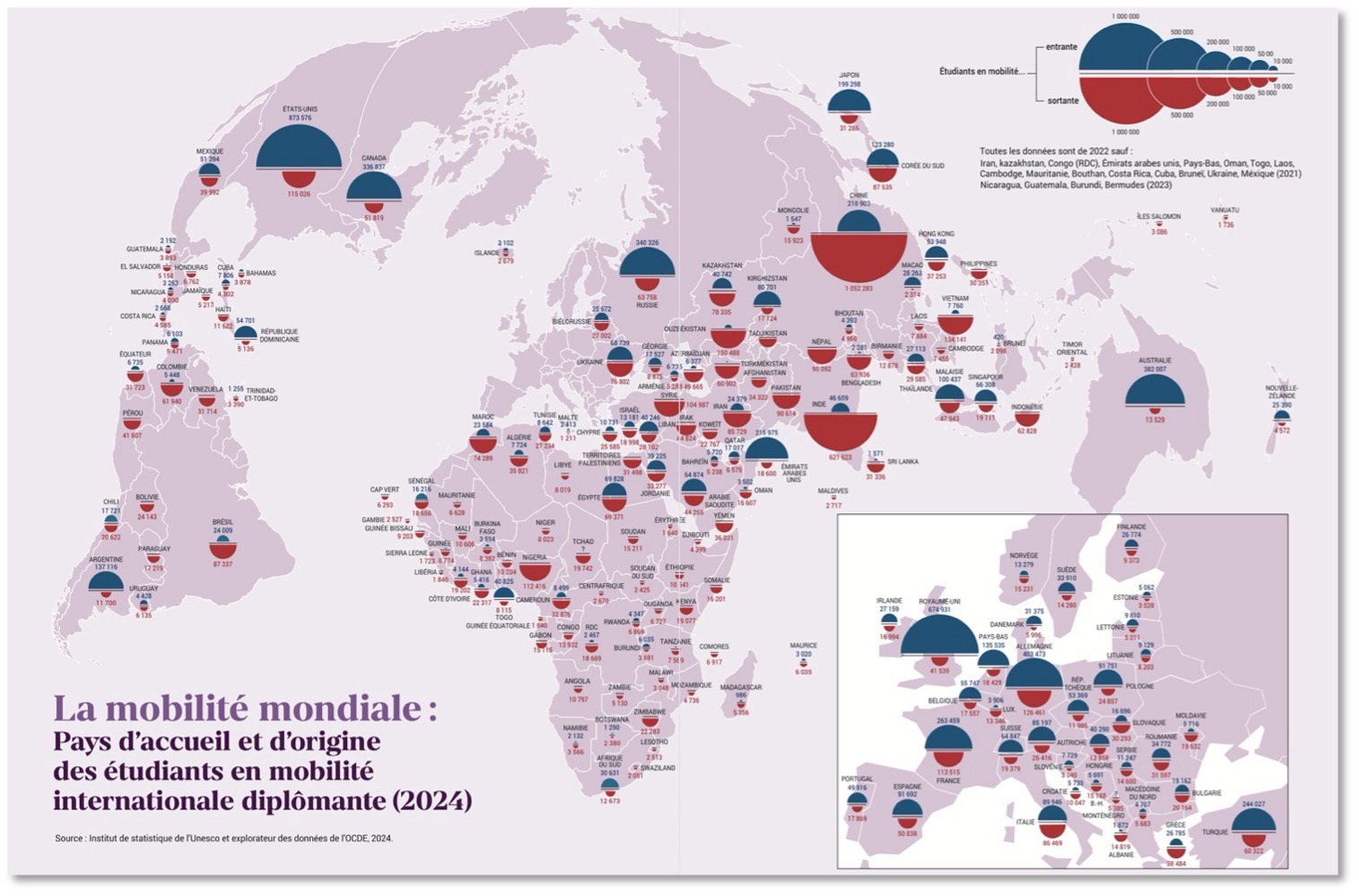
The driving force behind this pressure is the severely underdeveloped university infrastructure in countries of the Global South, including those that have experienced sustained economic growth such as China and India or, in Africa, Nigeria. There is no indication that in the years ahead, projects commensurate with this glaring deficit will come to bridge the accumulated gap. This general situation fuels student mobility flows abroad and creates internally a pressure to succeed in examinations, which helps explain why in many respects the generational uprisings (Nepal, Bangladesh, Indonesia considering the recent unrest in Jakarta and currently: India) take the form of a genuine existential struggle for students seeking a degree, the promise (however imperfect) of a successful entry into professional life.