
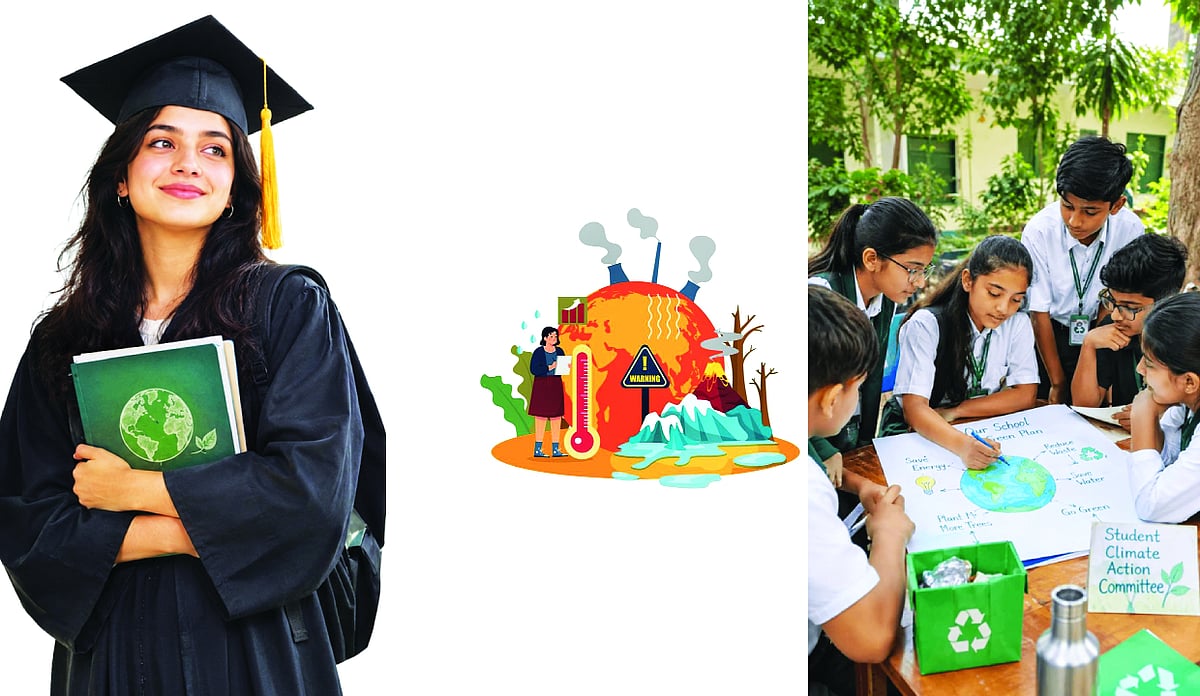
India must strengthen climate research and interdisciplinary education to improve forecasting, prepare for extreme weather and build resilience
Every year, much of India plans its life around a weather system it still cannot fully predict. Farmers wait on the monsoon to sow, reservoirs and power grids depend on it, and a delay of a few weeks can show up in food prices across the country. Add longer spells of extreme heat, sudden cloudbursts and cyclones that gather strength faster than expected, and climate starts to look less like an environmental talking point and more like an everyday economic and social concern. For a country with a large population, a vast agricultural sector, a long coastline and fast‑growing cities, building strong climate research capability has to be treated as a national priority.
The gap that still exists in prediction
Better prediction of extreme rainfall, heatwaves, tropical cyclones and water stress has direct consequences for disaster preparedness, public health, food and water security, energy systems and economic growth. It also shapes who is hit hardest when things go wrong. Weather and climate forecasting have improved considerably, yet substantial uncertainties remain. India needs to strengthen research that deepens understanding of the climate system and human‑induced climate change, sharpens early‑warning systems, and turns scientific knowledge into workable policies for mitigation, adaptation and resilience.
(...)