At the Confucius Institute of Tashkent State University of Oriental Studies, Uzbekistan, students gathered on Sept 24 to make mooncakes, a traditional Chinese delicacy, deepening their understanding of the Mid‑Autumn Festival through hands‑on cultural exchange.
The event is one example of how China and Central Asian countries have deepened ties in recent years through people‑to‑people and vocational cooperation.
Confucius Institutes have become important platforms for Central Asian students to learn Chinese, while Luban Workshops train highly skilled technical professionals to contribute to these countries' development and construction.
READ MORE: More in region are seeking to learn Chinese
Central Asia now hosts 13 Confucius Institutes, with Kazakhstan accounting for five institutes, Kyrgyzstan four, and Uzbekistan and Tajikistan two each, according to Xinhua.
At the Luban Workshop of L. N. Gumilyov Eurasian National University in Astana, Kazakhstan, robotic arms, computer workstations and drone training equipment fill a smart laboratory where students learn how computer vision supports industrial automation.

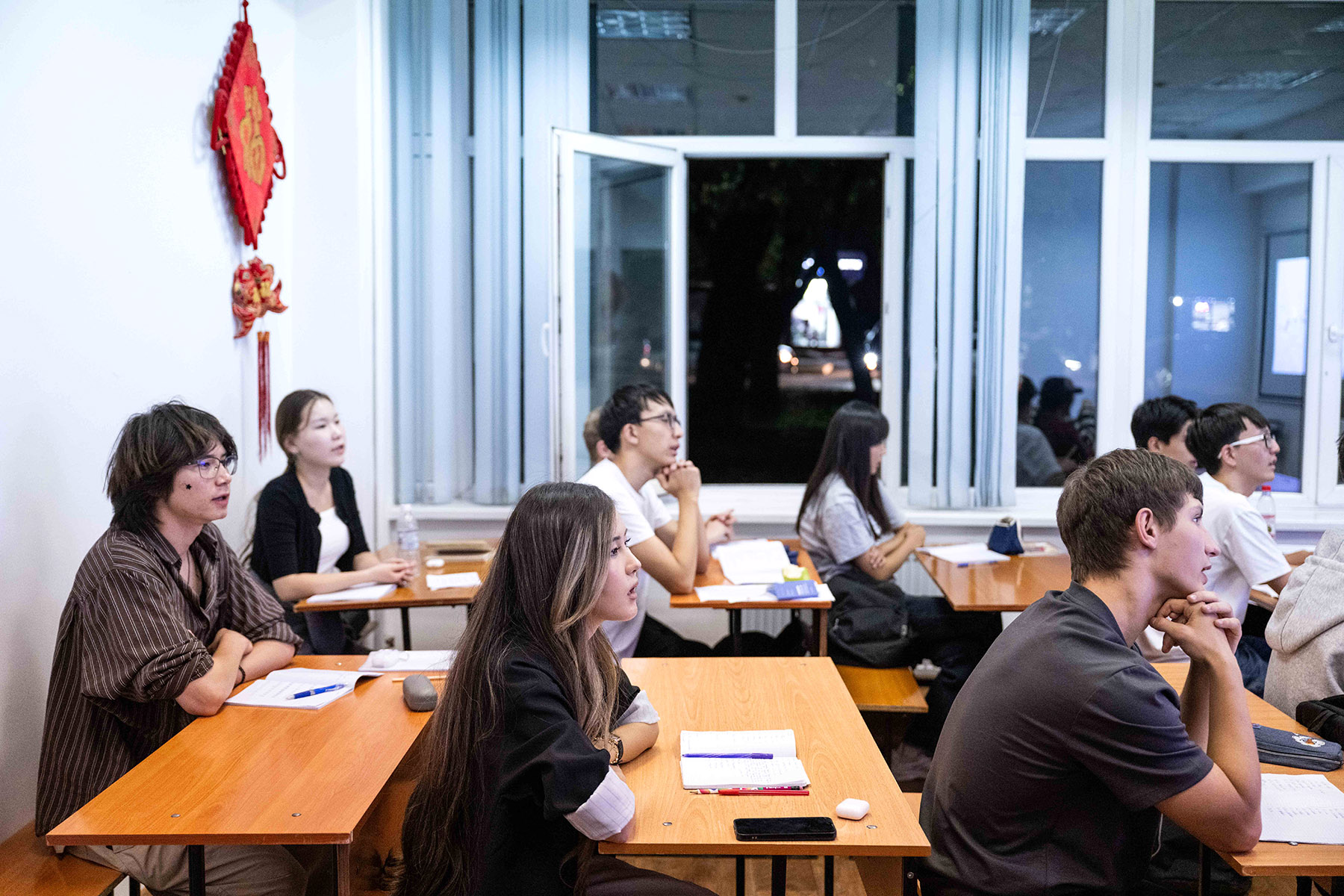
A student shows a paper‑cutting work at the Confucius Institute at the Osh State University in Osh, Kyrgyzstan, on Sept 22, 2026. (PHOTO/XINHUA)
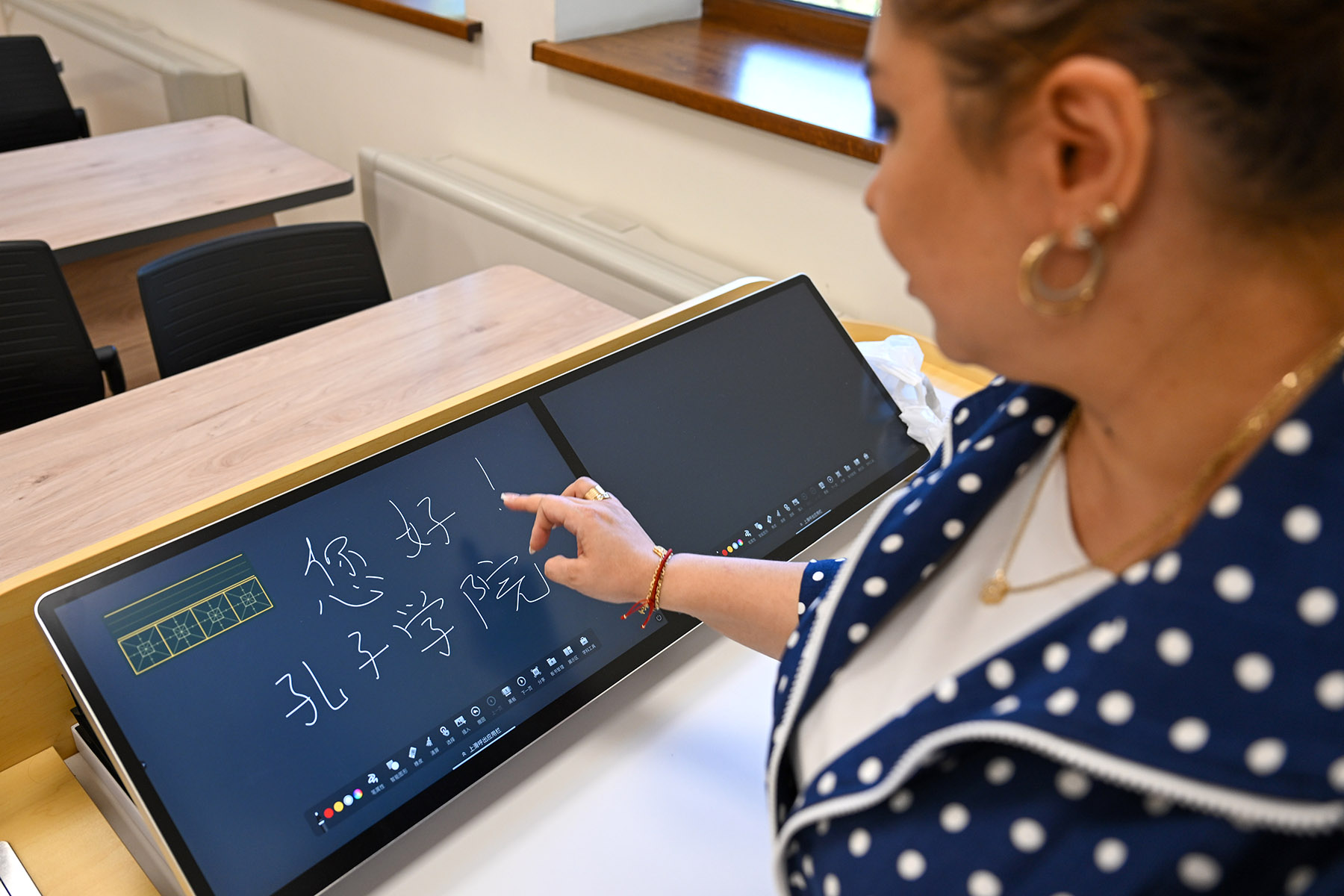 A teacher gives a class on Chinese language at the Confucius Institute at the Tashkent State University of Oriental Studies in Tashkent, Uzbekistan, on Sept 24, 2026. (PHOTO/XINHUA)
For 20-year‑old student Zhansaya Abdurakhman, the workshop offers a glimpse into a future career as Kazakhstan places a growing emphasis on AI development during its Year of Artificial Intelligence.
"We studied computer vision and how to work with a robotic manipulator for industrial automation," she said. "These skills are in great demand, and such practical experience can help us prepare for jobs in modern industrial enterprises."
(...)