Just northwest of Shanghai, a small city called Taicang tells a big story. Home to more than 560 German‑funded enterprises, it saw the opening of China’s first Sino‑German Dual‑System Vocational Education Industrial Park in May 2024 — a facility designed to train up to 5,000 skilled workers a year under the German apprenticeship model. Behind it lies a deeper architecture: Tongji University’s Institute of Vocational and Technical Education, running since the 1990s, has helped shape China’s own model of dual vocational education.
Education is a holistic undertaking that extends to individuals, families, society, the economy and politics, covering a range of themes including health, labor, prosperity, fulfilling lives, deep knowledge about human nature and the ways of the world. Although education affects virtually everyone existentially, it is not an easy field to popularize. Still, it holds the key to the future, both in China and the world.
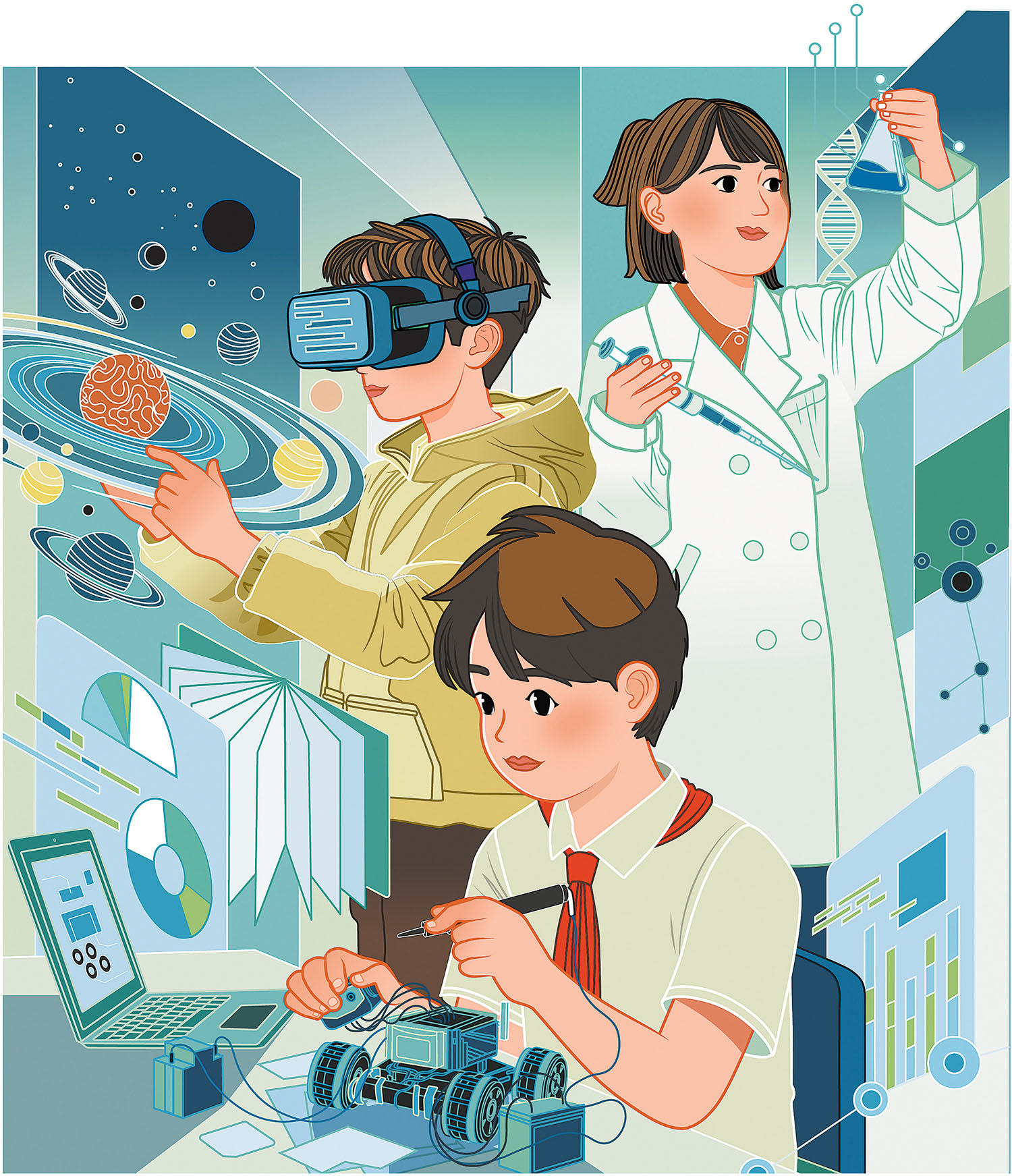
During the 15th Five‑Year Plan (2026-30) period, China is recalibrating its education system to meet the demands of rapidly changing demographics, a transforming labor market and an economy pivoting toward high‑quality growth. The 2024-35 master plan on building China into a leading country in education, jointly issued by the Communist Party of China Central Committee and the State Council, is the most ambitious blueprint to date. It does not merely tweak curricula but delicately redefines education for the future: cultivating not just degree holders, but skilled workers, innovative engineers and lifelong learners capable of sustaining China’s competitiveness.
(...)