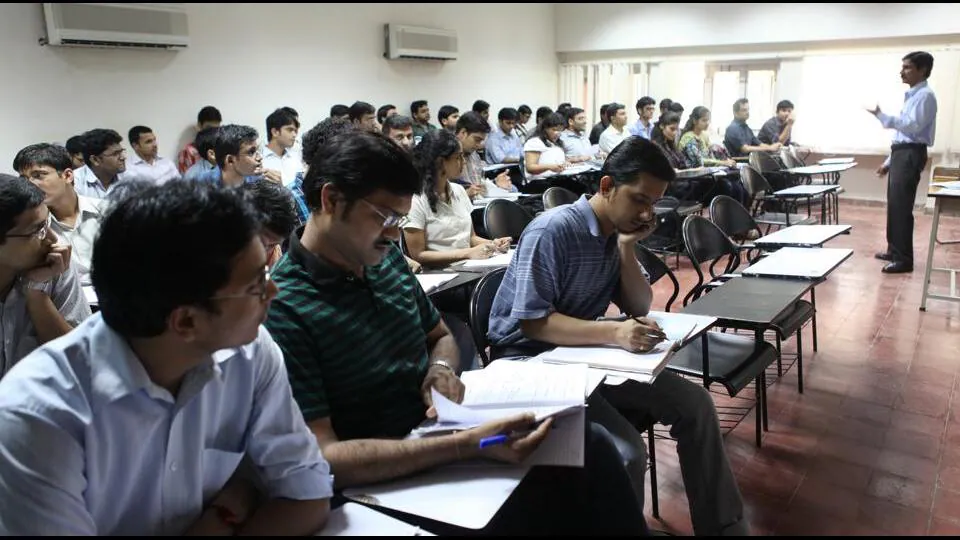
In 2024, a record high of around 6.9 million students studied outside their home countries. Projections put that number above 10 million by 2030.
And each year, their numbers grow. But where are these students going, and where are they from? Where exactly are the countries with the largest international student population?
Here’s a summary:
- China and India send the most students; the US (1.1M), UK (686K), and Australia (566K) receive the most.
- Canada and Australia are capping visas; the US is declining under Trump‑era policy changes.
- Germany is a growing alternative — tuition‑free, 469K international students and rising.
- India is pivoting from sender to destination, targeting 1.1M inbound students by 2047.
(...)
Countries with the most students going abroad
The answer is China and India, the world’s two most populous nations.
More than 1.2 million Indian students were enrolled in higher education abroad in 2025, according to India’s Ministry of External Affairs — a 5.7% decline from 2024, when the figure was 1.33 million. China, meanwhile, had 1,021,303 students studying abroad for a degree in 2023 according to the UNESCO Institute for Statistics, with an additional 200,000 on exchange programmes.
Their destinations? The US, UK, and Australia remain popular options, but many are also branching out to explore prestigious universities in Asia and Europe.
Countries like:
- Netherlands: 131,000 enrolled in 2024/25 — (new enrolments dropped 5%)
- Spain: 149,280 enrolled in 2023/24 (+6.5% increase from the previous year)
- Ireland: nearly 45,000 enrolled in 2024/25 (10% increase year‑on‑year)
The demand to study abroad remains strong in 2026 and beyond, as experts believe that China’s economy is one of the main reasons students choose to go abroad.
The youth unemployment rate is high, and the younger generation is open to study abroad opportunities as they consider that a better option than attempting to break through bleak job prospects.
Other countries with large numbers of students going abroad include Nigeria, Vietnam, Germany, and Uzbekistan, with around 100,000 students each.
A foreign degree also offers a competitive edge in a saturated job market. Internationality is one of the six key employability drivers (specialisation, graduate skills, academic performance, focus on work expertise, social impact and leadership, and internationality) according to the 2023-24 Global Employability University Ranking and Survey (GEURS).
India’s rise as a destination for international students
India is quickly emerging as a popular destination for international students, with long‑term plans to attract up to about 1.1 million international students by 2047.
It has been reported that there are currently 58,000 international students in India, as of 2025.
This is a shift, as previously India was seen mainly as a source of students going abroad rather than as a destination for them, due to the government’s emphasis on “internationalisation of higher education.”
One key reason for this increase is that international universities are now opening branch campuses in India. For example, several UK and Australian universities, such as La Trobe University, Victoria University, Western Sydney University, and the University of Bristol, have announced plans to launch or expand campuses in Indian cities.
These campuses offer globally recognised degrees, joint programmes, and exchange opportunities — often at a lower cost than studying overseas.