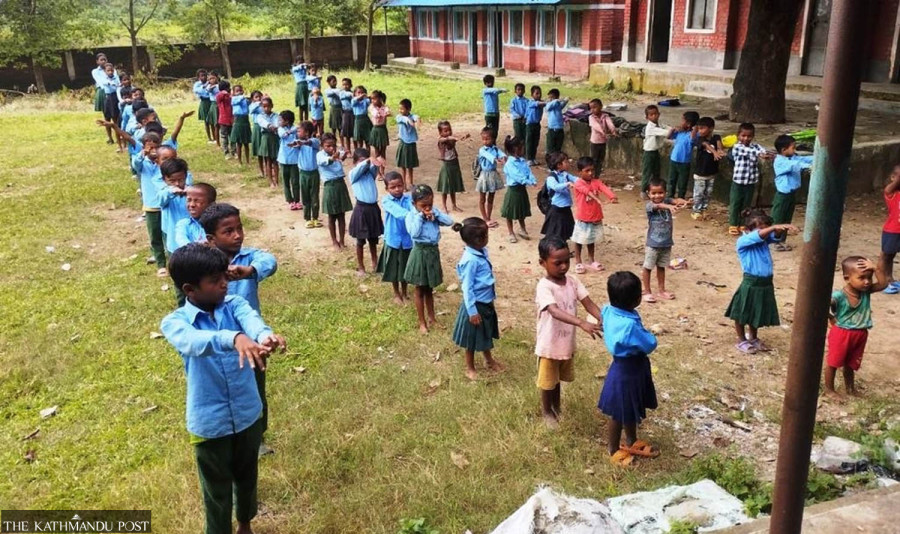
Every morning, children from villages in India make their way into Nepal, some travelling by rickshaw, others on foot. They join their Nepali classmates to sing the national anthem before heading into their classrooms.
The scene has become increasingly familiar at schools in border districts such as Jhapa, Bardiya and Rautahat. Unable to find satisfactory schooling close to home, these children are crossing an international border for their education.
The movement reflects the longstanding social and cultural ties between communities on either side of the Nepal‑India border, traditionally described as roti‑beti relations, rooted in shared livelihoods and family connections. While many Nepali students travel to India for technical and higher education, the flow also runs in the opposite direction. Schools in parts of Koshi, Madhesh and Lumbini provinces have become regular destinations for Indian children seeking primary and secondary education.
In Jhapa, children from Dalle village in India’s Bihar state travel about two kilometres to attend school in Kachankawal rural municipality-5. The communities on both sides of the border share close social ties, making the daily journey to Nepal a familiar routine for families in Dalle.
(...)
For social activist Prakash Tharu, the growing number of Indian children studying in Nepal is a welcome development that could strengthen ties beyond the border region.
“When children from both countries sit in the same classroom, it brings them even closer”, he said, pointing to their shared cultures and ways of life. Nepal’s schools, he added, have the potential to attract students from other countries too, making education a more internationally oriented sector.
(...)