Artificial intelligence is increasingly pervasive and capable but is also very hungry for power. Researchers, including those at the University of Tokyo, have developed a new approach to building physics‑based AI, systems that use the natural behavior of physical systems to process information, that dramatically reduces the amount of computation required for them to run. The approach simplifies both how these systems learn and how they are structured. It was demonstrated using an optical computing system that processes information with light and could help pave the way toward faster and more energy‑efficient AI hardware.
It’s hard to ignore the presence of AI. News stories and software constantly make its presence felt, even if you don’t interact with AI systems directly. Behind the scenes, AI systems are becoming larger, more complicated and more resource‑intensive. One of the biggest concerns around the growth of AI is the energy required to run these systems. Training AI models in particular can consume vast amounts of energy, driving researchers to search for ways to improve efficiency rather than simply increasing the size and complexity of AI systems. One possible approach is to use specialized physical systems to perform some of the calculations.
(...)
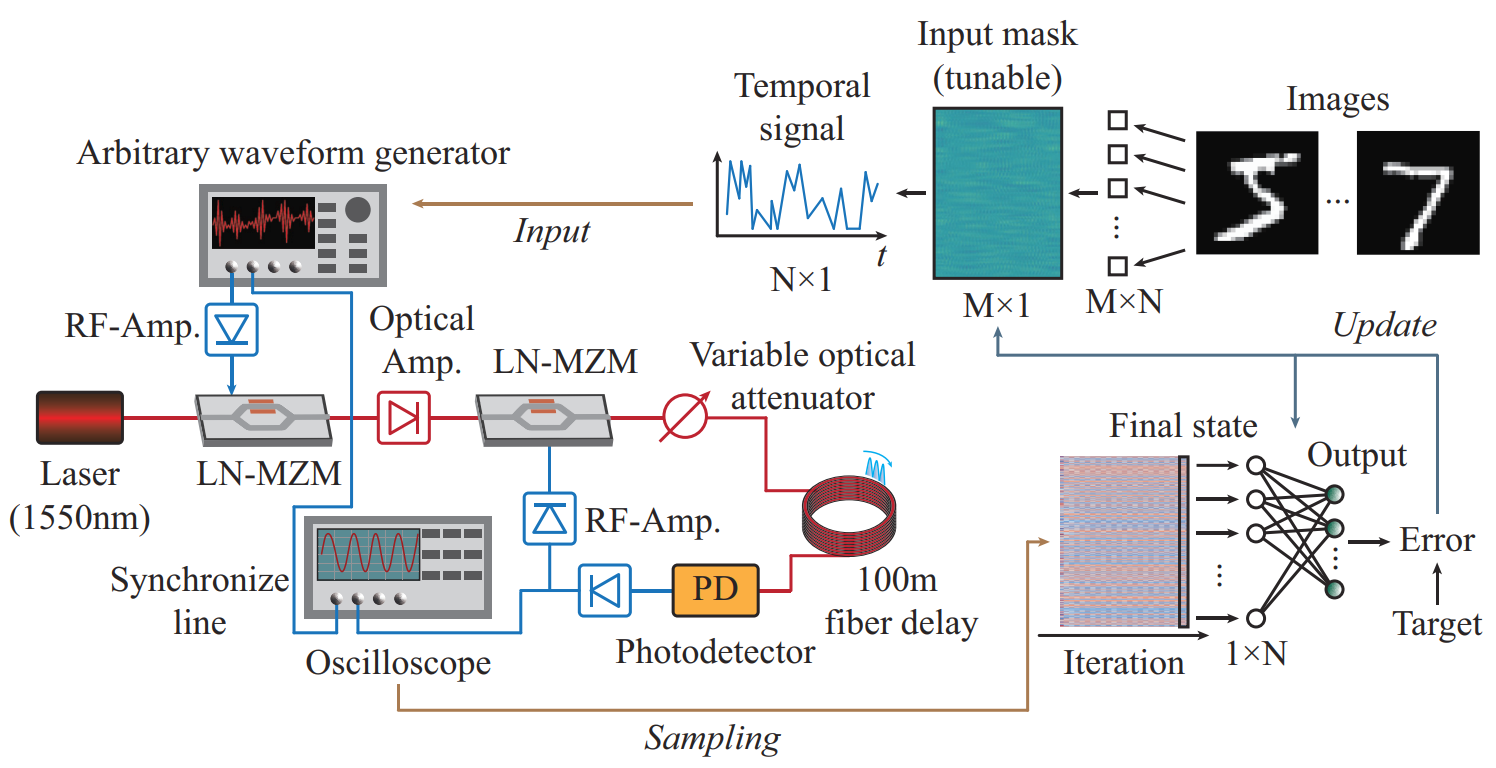
Schematic overview of the single‑map framework. In the optical computing system used to demonstrate the single‑map approach, information is converted into an optical signal, processed as it passes through a fiber loop, and then converted back into an electrical signal for analysis. The system uses a 200-meter optical fiber and a small number of electronic components to perform the AI calculations. ©2026 Nakajima et al. CC‑BY‑ND
(...)