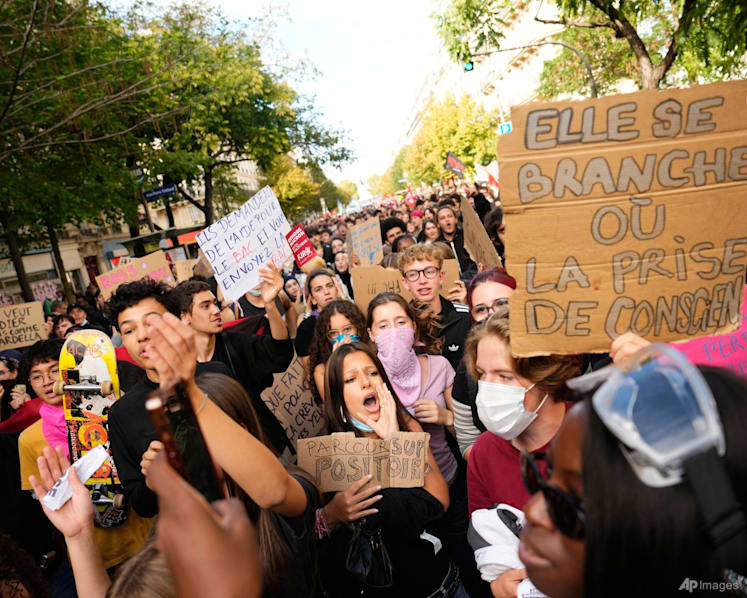
Mass protests over conditions at France's high schools have descended into sporadic violence, resulting in nearly 500 arrests and leading French President Emmanuel Macron to call an emergency meeting.
France’s interior ministry said at least 256,000 people protested nationwide on Tuesday (Oct 6), adding that hundreds were arrested after some of the protests turned violent.
What started as a protest over teacher and staff shortages at a high school outside Paris last month has morphed into nationwide demonstrations, with parents, teachers and union workers joining with student movements to protest the state of France’s education system.
Rights groups, unions and the students have accused authorities of using disproportionate force, with French police suspending the use of stun grenades after a teenage protester lost a hand on Monday.
CNA takes a look at what sparked the protests, what the students want, and if the movement could turn into something bigger.
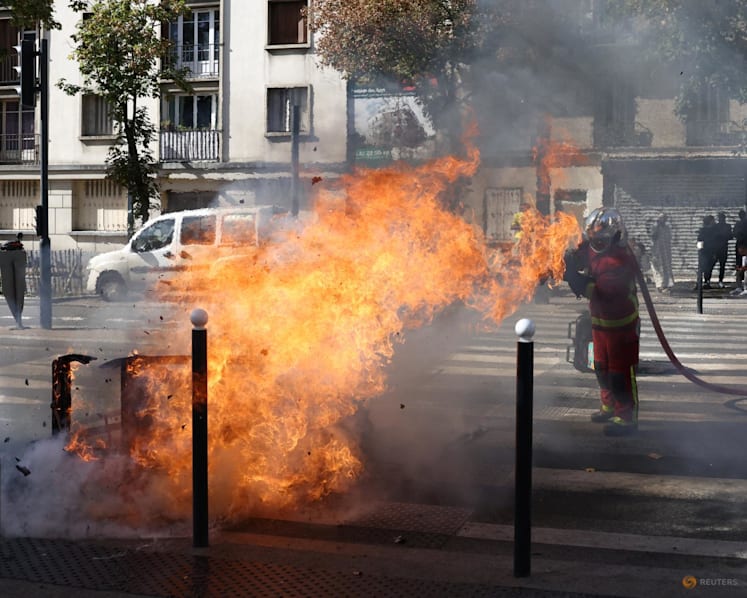 A French firefighter extinguishes a fire amid clashes between protesters and police during a high school student protest in Pantin near Paris on Oct 2, 2026. (Photo: Reuters/Tom Nicholson)
What started the protests?
Rather than a single government policy, the movement was sparked by events at the Saint‑Exupery high school in the Paris suburb of Creteil.
Staff members went on strike on Sep 17 over vacant positions and a lack of resources. Students joined the teachers soon after.
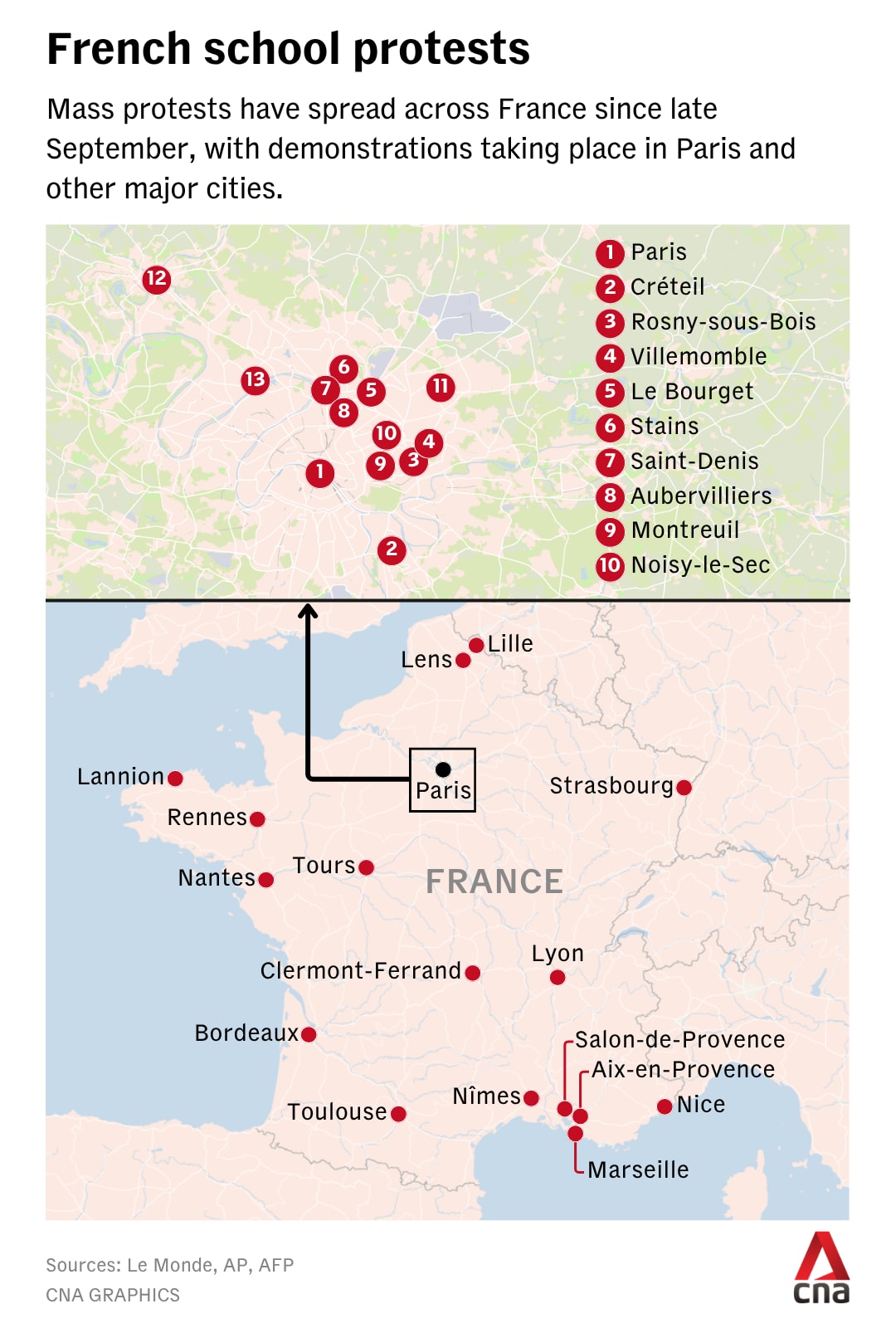
Within days, similar protests spread through the Parisian suburbs - where poverty levels are high - and then to other parts of France, where entrances to schools in areas like Marseille, Strasbourg, Tours and Lille remain blockaded.
The movement gained momentum through social media platforms such as Instagram and TikTok, which students used to organise protests and circulate their demands.
While protesters raised different concerns, common complaints included teacher shortages, overcrowded classes, deteriorating facilities, long school days, inequality between schools and proposed budget cuts.
According to statistics from France's education ministry, 9.8 per cent of teaching hours in public secondary schools went untaught during the 2024-2025 academic year, with the majority of the missed hours due to absent teachers not being replaced.
A 17-year‑old protester at a school in Aubervilliers, a suburb north of Paris, told Reuters that she once took a high school French exam without a French teacher.
"The education authority is not investing enough in the suburbs. It's classist and racist," said another student.
What do the students want?
As there is no single organisation representing the protesters, there are no specific demands that would end the protest.
However, student movements such as the Union Etudiante - a federation of local student unions - have broadly called for more teachers and educational support staff, renovations for ageing infrastructure and overhauls of overloaded timetables.
Some have also taken issue with Parcoursup, the university admissions system introduced in 2018 that has been criticised by some students and teachers as opaque and discriminatory.
(...)