There is a reason Leonardo da Vinci is remembered as more than an artist.
He painted the Mona Lisa, but he was also deeply interested in anatomy, engineering, mathematics and the workings of nature. Isaac Newton is remembered as a physicist and mathematician, but his interests also extended to theology and other areas of knowledge.
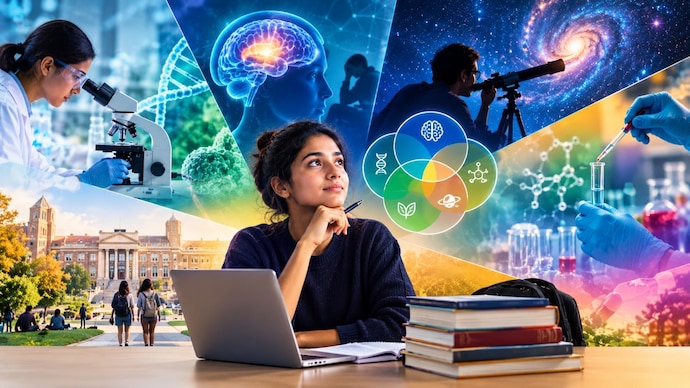
The idea of learning across subjects, therefore, is hardly new. What is changing is the opportunity to formally combine those subjects — and the need to do so in a world where problems rarely belong to just one field. Could students of the future study engineering alongside biology, economics with mathematics, or medicine with artificial intelligence, without sacrificing depth in their main subject?
The 2026 Nobel winners provide a timely example. Their academic journeys and research have moved across disciplines, from biology and biophysics to neuroscience, from particle physics to astronomy, and from chemistry towards questions relevant to biology and pharmaceuticals.
The question for students is no longer simply which subject should I choose? It may increasingly be what should I combine with it?
(...)