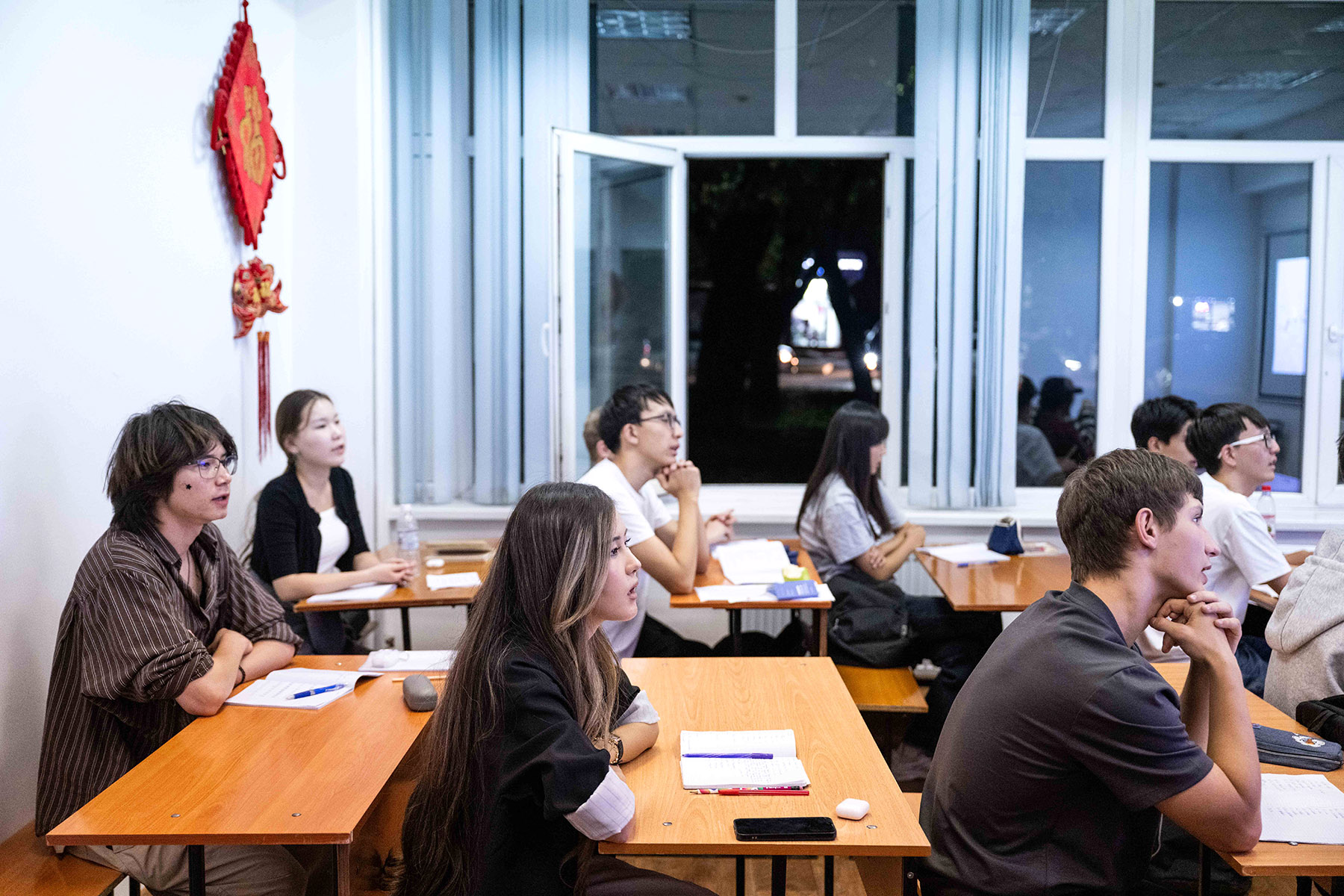
This new report shows increasing demand for higher education, which plays an irreplaceable role in building sustainable societies. Yet this expansion does not always translate into equitable opportunities, highlighting the need for innovative financing models to deliver quality, inclusive higher education. Through major initiatives such as the Global Convention on Higher Education and the Qualifications Passport, UNESCO will continue to support countries in delivering high‑quality higher education opportunities to everyone.
Khaled El‑EnanyUNESCO Director‑General
Today’s report, which includes new data from 146 countries, shows that the number of students enrolled in higher education worldwide has increased from about 100 million in 2000 to 269 million in 2024, representing 43% of the population in age of attending higher education (typically 18-24 years old).
However, this growth masks stark regional disparities, with 80% of young people in Western Europe and Northern America enrolled in higher education, 59% in Latin America and the Caribbean, 37% in the Arab States region, 30% in South and West Asia, and 9% in sub‑Saharan Africa.
Private institutions continue to account for a third of global enrollment, with the highest share in Latin America and the Caribbean (49% in 2023). In countries such as Brazil, Chile, Japan and the Republic of Korea, 4 in every 5 students attends a private higher education institution. The report shows that only one third of countries legally mandate tuition‑free public higher education.
Completion of studies has not increased at the same pace as enrolment, with the global gross graduation ratio only rising from 22% in 2013 to 27% in 2024.
Increased international mobility and gender equality
The number of students going abroad for higher education has more than tripled over the past two decades, from 2.1 million in 2000 to nearly 7.3 million in 2023. Yet mobility benefits only 3% of the global cohort, with significant regional disparities.
Seven countries (United States, United Kingdom, Australia, Germany, Canada, the Russian Federation and France) continue to host half of all international students. Countries such as Türkiye and the United Arab Emirates are becoming increasingly popular – with mobility numbers up at least fivefold in the past decade, they now closely trail France.
International students increasingly prefer to study within their region: in Latin America and the Caribbean, the share of intra‑regional mobility rose from 24% to 43% between 2000–2022, with Argentina as the top destination. Internationally mobile students from the Arab States are increasingly concentrated in the Gulf countries and Jordan, marking a shift from the dominance of Western Europe and North America a decade earlier.
UNESCO plays a major role in promoting international student mobility through its Global Convention on the Recognition of Qualifications concerning Higher Education and its regional equivalents, which have already been ratified by 93 countries. The Convention not only establishes fair and transparent recognition of qualifications, but also sets universal standards for quality assurance to ensure trust and confidence in higher education qualifications worldwide.
Women now outnumber men in higher education: globally, there were 114 women enrolled in higher education for every 100 men in 2024. Gender parity has been reached in all regions except sub‑Saharan Africa. Central and Southern Asia made strong progress, from 68 women enrolled per 100 men in 2000 to achieving gender parity in 2023. Women remain underrepresented at doctoral level and hold only about one‑quarter of senior leadership roles in academia.
(...)
Read the full report: