Editor’s note: this piece was first published by AcademiaSG, a scholarly site promoting scholarship of/by/for Singapore.
• • • • • • • •
In public discourse, a common caricature of the modern transnational elite almost invariably conjures someone who is a hyper‑mobile, deterritorialised global nomad. This is the privileged cosmopolitan who glides seamlessly through airport business lounges, holds multiple visas, accumulates degrees from Ivy League or Oxbridge institutions, and floats comfortably unmoored from any single nation‑state. In the words of Zygmunt Bauman, these high‑flyers are often portrayed as individuals who “harbour no appetite for the burdens of long‑term communal obligations”. They are, as the educational sociologists Jane Kenway and Aaron Koh once described, a kind of modern “nobility without a state”.
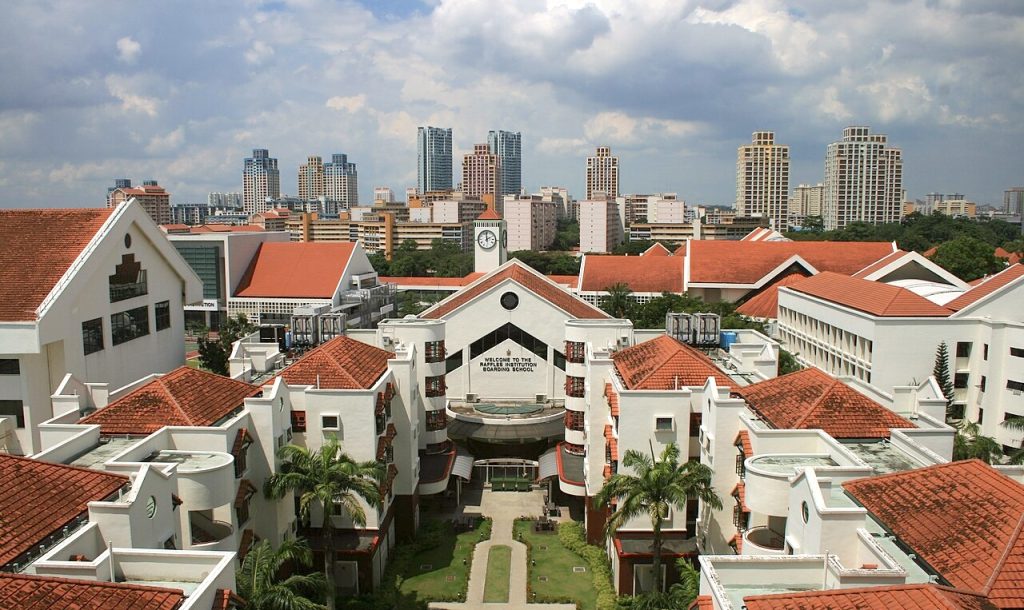
On paper, the students I taught for half a decade at Raffles Institution—Singapore’s oldest, and arguably most prestigious secondary school—would seem to fit this bill perfectly. Consider Ming, a student who first arrived in Singapore when she was 15 years old. Born and raised in an urban metropolis in China, Ming was scouted on a Singapore government scholarship that covered every expense: tuition, boarding, living stipends, and flights. By 19, she had mastered English, sailed through rigorous national examinations with top honours, and was weighing admission offers from top‑ranked universities in the UK and US. By 25, armed with a postgraduate degree in finance, she was working as a financial analyst on Wall Street. Her passport remained Chinese, but her lived reality spanned Shenzhen, Singapore, London, and New York. She seemed to embody the frictionless neoliberal ideal as an agile economic agent equipped with the global currency of top academic credentials.
Yet, Ming’s story, like those of her Singaporean and immigrant peers, contains a certain dissonance. Far from being footloose cosmopolitans gliding effortlessly above local constraints, these young high‑flyers are intensely, and often anxiously, bound to the territorial, political, and cultural machinery of the nation‑state. In my new book, Language and Identity among Elite Students: Grounded High Flyers in Singapore, I examine how these top‑performing students talk about their trajectories, scholarships, their peers, and use of language; and in so doing, uncover the hidden fissures, racial contradictions, and cultural anxieties that underpin modern Singapore.
(...)
About the Author
 Luke Lu is Assistant Professor in the School of Humanities, Linguistics and Multilingual Studies, Nanyang Technological University. Language and Identity among Elite Students: Grounded High Flyers in Singapore (2027) is available from Routledge.

