
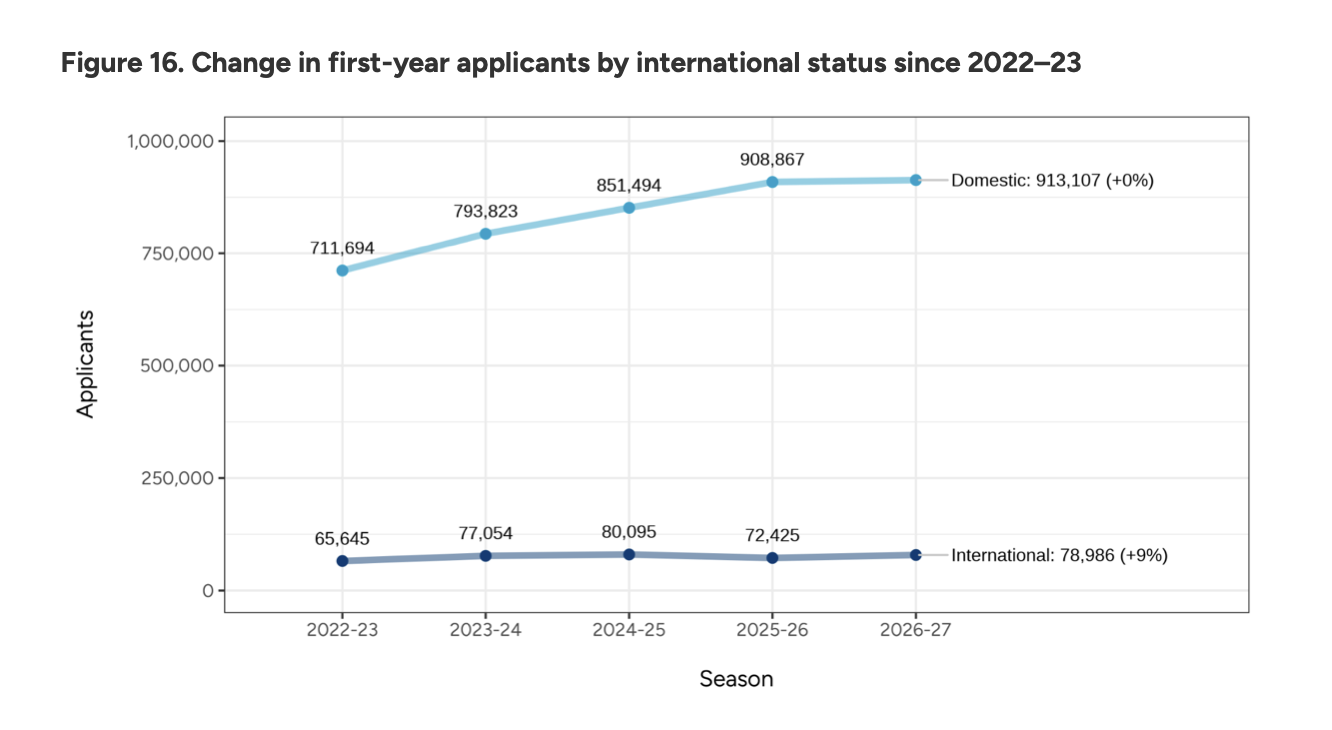
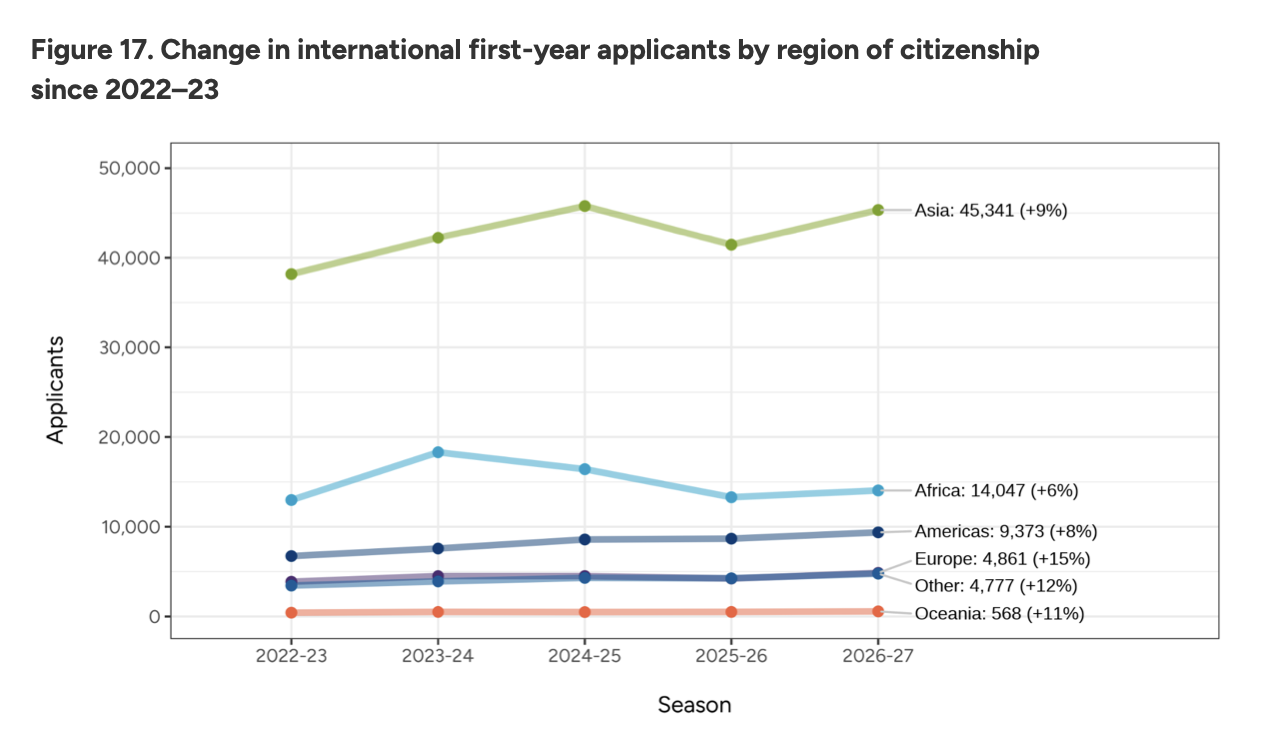
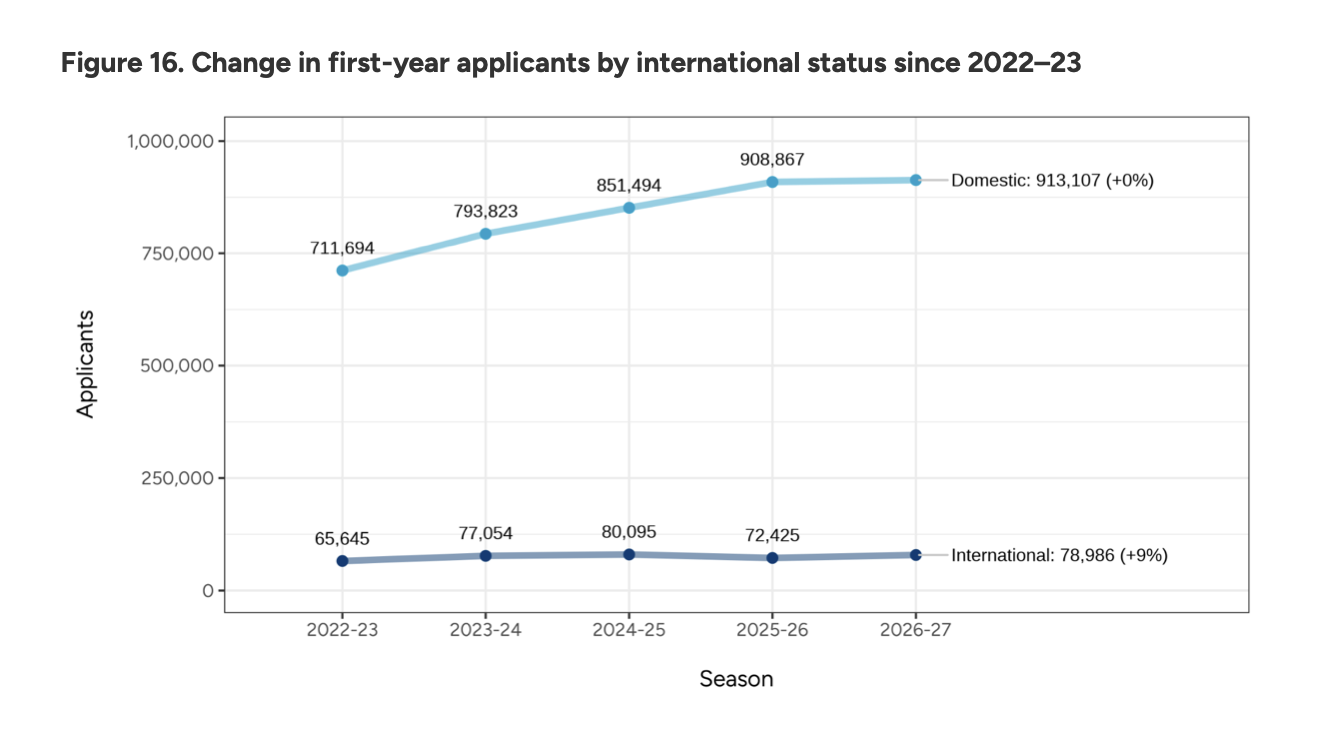
The number of international applicants increased compared to this point during the prior season after declining in 2025-26: While domestic applicants remained flat compared to the prior season, the number of international applicants increased by 9% (compared to a 9% year‑over‑year decrease in applicants at this time during 2025–26). This growth was driven in part by a pronounced increase in applicants from Europe (15%).
(...)
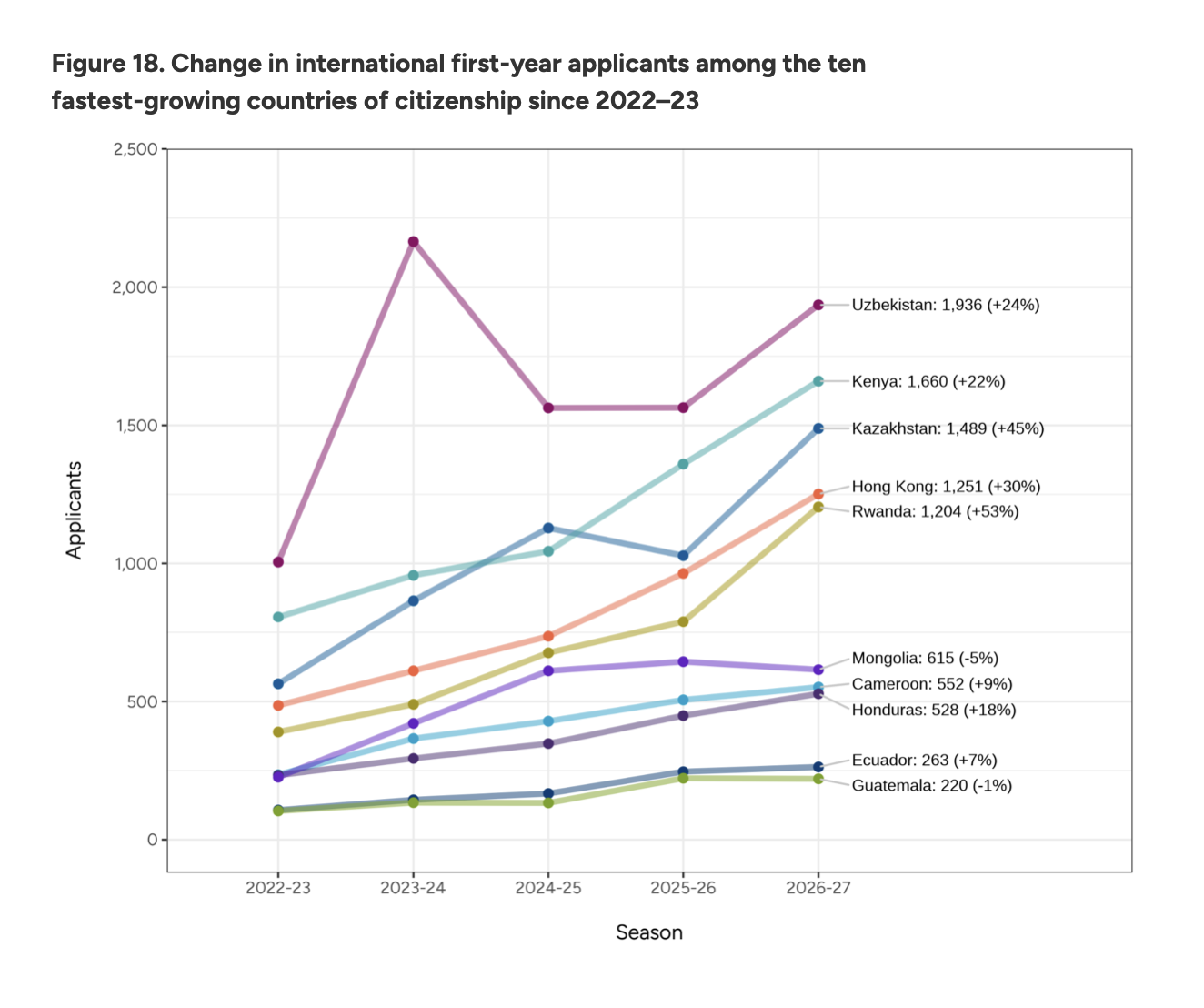
Figure 16 charts applicant growth among domestic and international applicants, where international applicants have explicitly reported active citizenship in a country besides the United States. Figure 17 shows the growth in applicants by region of the world for those international applicants (9). For a more granular, country‑by‑country view, Figure 18 shows growth in applicants by country of citizenship for the ten fastest‑growing countries of citizenship since 2022–23. Lastly, Figure 19 shows applicant growth by country of citizenship for the ten highest‑volume countries as of this point in the current season.
The decline in international applicants, acknowledged in our 2025-26 End of Season Report, has reversed through this point in the 2026-27 season, with international applicants up 9% compared to this time in the 2025-26 application cycle. This stands in contrast to the 9% year‑over‑year decrease in international applicants documented in the November 1 deadline update in 2025-26. The overall increase in international applicants was driven by a 41% increase from Pakistan, a 17% increase in applicants from India, and a 21% increase in applicants from Ghana; all of which were notable reversals of trends at this point in the 2025-26 application cycle.
(9) We use country regional classifications per the United Nations Statistics Division methodology. Students with multiple citizenships (not including a U.S. citizenship) or who indicate being stateless are grouped into the “Other” category.
(...)