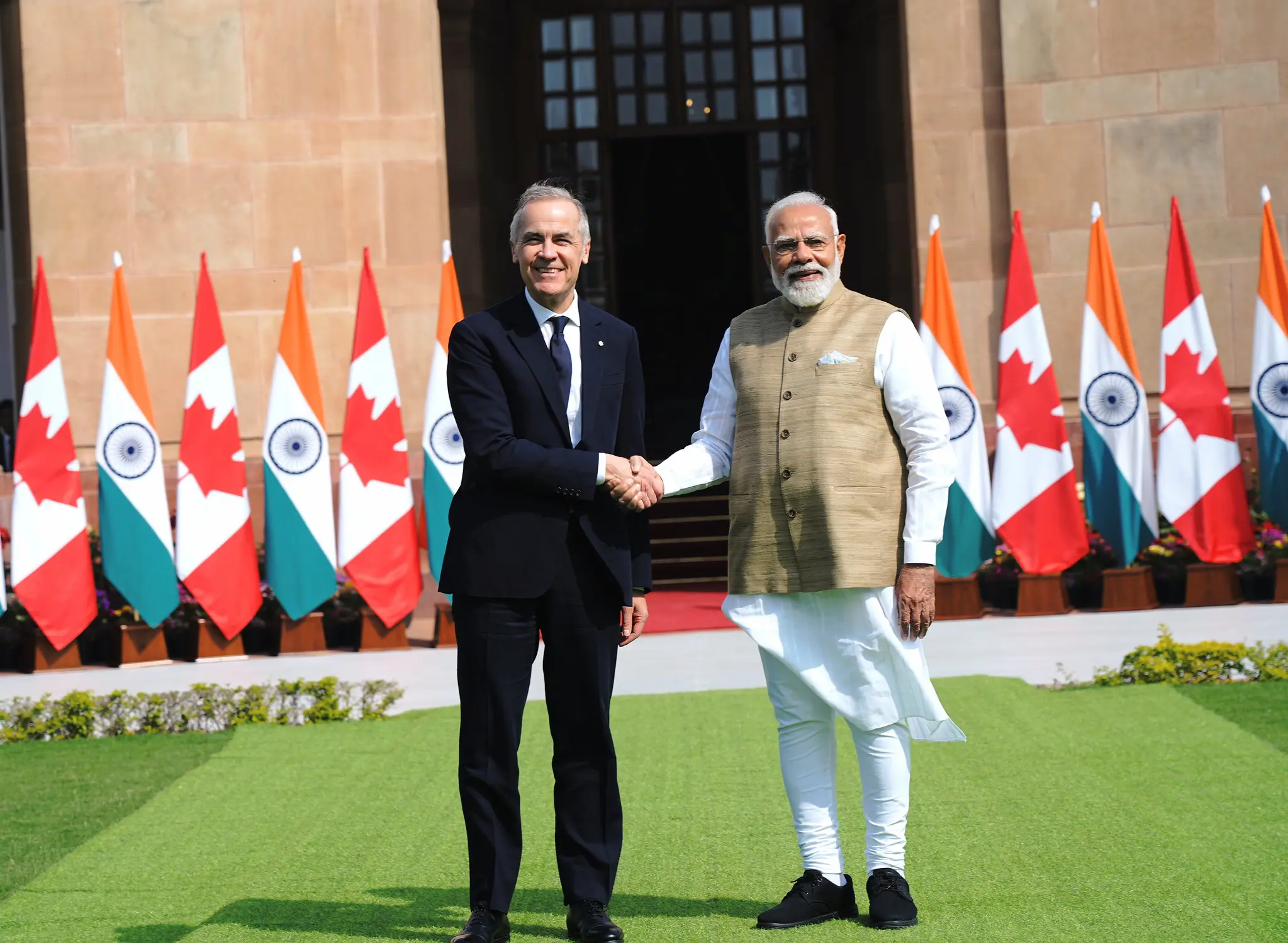
The establishment of the India–Canada Migration and Mobility Dialogue marks an attempt by the two countries to give greater institutional structure to the movement of students, skilled workers and professionals between them. The inaugural meeting, held in New Delhi on 26 October 2026, brought together senior officials from India’s Ministry of External Affairs (MEA) and Canada’s Immigration, Refugees and Citizenship Canada (IRCC). The two sides signed the Terms of Reference for the dialogue, agreed to hold it annually and decided to support it through a Joint Working Group on Migration and Mobility. The initiative comes as both countries seek to strengthen people‑to‑people ties and expand economic cooperation. But what does the new mechanism actually establish, and how might it shape future migration and mobility arrangements?
What the New Framework Establishes
The inaugural India–Canada Migration and Mobility Dialogue was co‑chaired by Sripriya Ranganathan, Secretary (Consular, Passport, Visa and Overseas Indian Affairs) in India’s Ministry of External Affairs, and Ted Gallivan, Deputy Minister of Immigration, Refugees and Citizenship Canada.
The central outcome was the signing of the Terms of Reference (ToR), providing an institutional basis for the dialogue. The two governments agreed that it would be held annually and supported by a Joint Working Group on Migration and Mobility. They also decided that the next meeting would take place in Canada on mutually convenient dates.
According to the Indian government’s announcement, discussions at the inaugural meeting focused on the mobility of international students, skilled workers, professionals and business visitors, as well as cooperation on migration management. The MEA described the initiative as a response to the complementarity between India’s young and skilled workforce and Canada’s demographic and labour‑market trends.
(...)
The decision to institutionalise migration and mobility discussions is an important step in the renewed India–Canada relationship. Its real value will lie in translating that institutional commitment into practical cooperation that benefits students, workers, professionals, and businesses in both countries.
(...)