While writing my undergraduate thesis in 2009 on the politics behind Australia’s immigration reforms of the 1960s and 1970s, I came across an episode in Gwenda Tavan’s The Long, Slow Death of White Australia that has stayed with me. Arthur Tange, secretary of Australia’s Department of External Affairs from 1954 to 1965, once suggested that the Department of Immigration send an officer to visit Australia’s diplomatic posts in Asia. He wanted Immigration to see what the White Australia policy meant for diplomats defending it in countries Australia wanted closer ties with.
Australia’s current policies and politics are profoundly different. But as debate over immigration intensified and Canberra tightened student visa rules, Tange’s predicament came back to mind. Do similar tensions now arise between officials managing Australia’s borders and those managing its relationships abroad? Home Affairs can defend tighter settings as protecting program integrity and curbing visa hopping. But how much more explaining must Australian diplomats do in countries whose students Australia has spent years encouraging to come?
International students can be economically valuable and politically inconvenient.
Under rules effective from 2 October 2026, student visa applicants need an exemption to include partners or dependent children. Days earlier, a Guardian Essential poll put One Nation at 25% of the primary vote, while 62% supported preventing most international students from bringing families.
International students can be economically valuable and politically inconvenient. Australia recorded about $55 billion in education‑related exports in 2025. Yet universities know how quickly priorities change. During the pandemic, public universities were excluded from JobKeeper. For 2026, Canberra set a national planning level and provider allocations for new international students.
(...)
Australian universities’ overseas campuses
Selected offshore campuses, operating, closed and planned, as at 9 November 2026
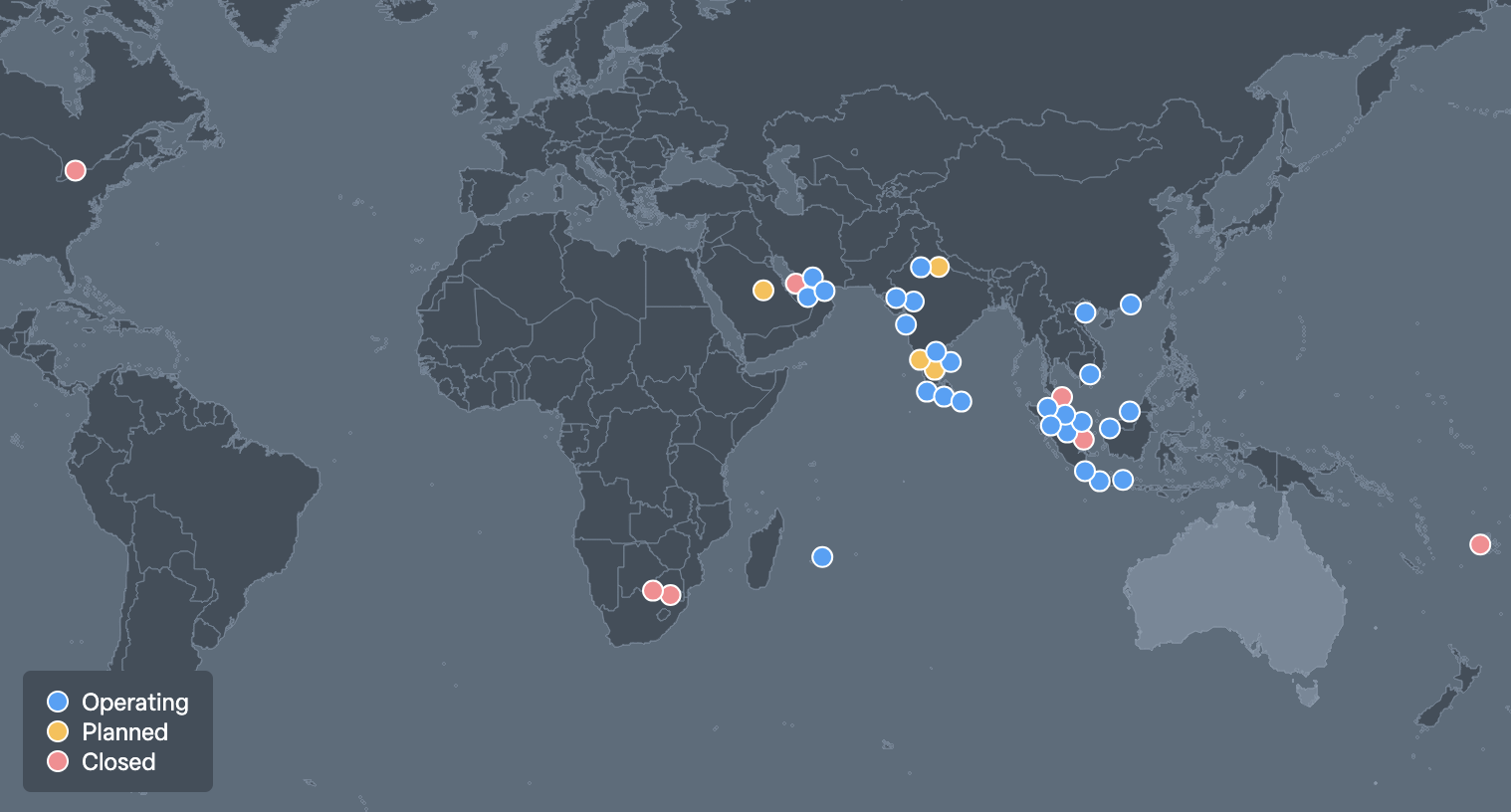
Source : Author’s compilation from the C‑BERT International Campus Listing and university sources. Note : Classification is based on the author's assessment of publicly available sources; definitions vary across institutions and datasets. Partner teaching sites and education/research centres are excluded. Planned openings remain subject to change. The map is not exhaustive.
(...)
Hangga Fathana is an Assistant Professor of International Relations at Universitas Islam Indonesia, with more than 15 years of experience teaching Australian politics and foreign policy.
(...)